
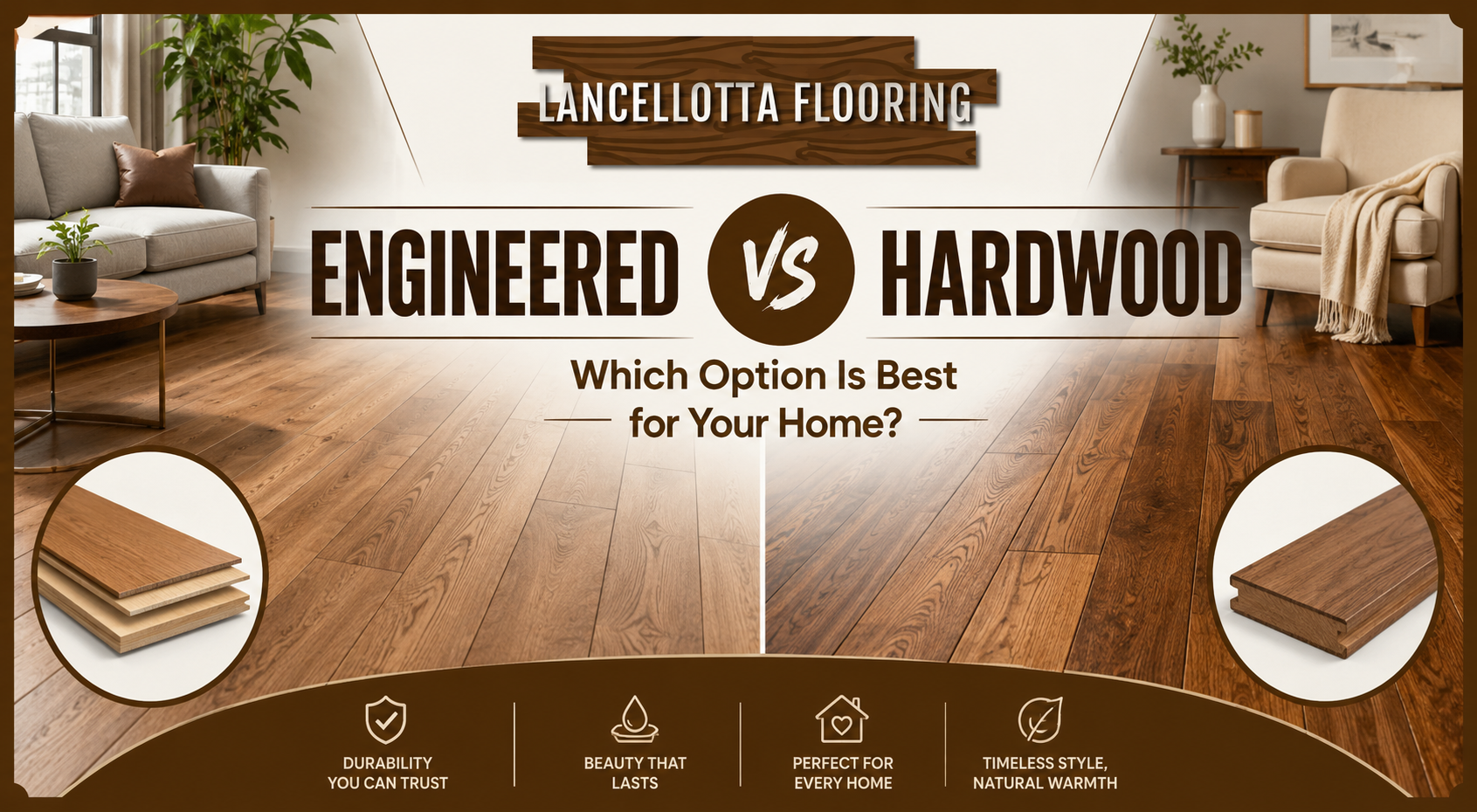
Choosing new flooring for your home can feel confusing, especially when comparing engineered vs hardwood flooring. Both options look beautiful and add value to a home but they have important differences in price, durability, moisture resistance and maintenance. The good news is that both choices offer the natural beauty of real wood. The right option depends on where you plan to install the flooring, how long you want it to last, your lifestyle and budget.
What Is Solid Hardwood Flooring?
Solid Engineered vs hardwood flooring is made from one solid piece of natural wood. Common wood types include oak, maple, walnut and hickory. Solid hardwood floors are known for their durability and long lifespan, and are usually installed by nailing the planks to a wooden subfloor.
According to recent 2026 flooring reports, solid hardwood floors can last 50 to 100 years or more with proper care and refinishing.
Benefits of Solid Hardwood
- Long lifespan
- Can be refinished multiple times
- Increases home resale value
- Classic and timeless appearance
Drawbacks of Solid Hardwood
- More expensive
- Sensitive to moisture and humidity
- Not ideal for basements or bathrooms
- Installation takes longer
What Is Engineered Hardwood Flooring?
Engineered hardwood flooring has a real wood top layer attached to layers of plywood or composite material underneath. It looks similar to solid hardwood after installation but has a different internal structure. Many engineered floors last between 20 and 40 years depending on the wear layer thickness and quality.
The layered design makes engineered flooring more stable in humid conditions. Modern flooring experts recommend it for basements, kitchens, and homes with changing temperatures.
Main Differences Between Engineered vs Hardwood Flooring
The biggest difference between engineered vs hardwood flooring comes down to construction and moisture resistance. Solid hardwood is made entirely from natural wood while engineered hardwood uses multiple layers for extra stability.
Here are the key differences homeowners should know
| Feature | Solid Hardwood | Engineered Hardwood |
| Material | Single piece of wood | Wood veneer with layered core |
| Lifespan | 50 to 100+ years | 20 to 40 years |
| Moisture Resistance | Lower | Higher |
| Refinishing Ability | 5 to 10 times | 1 to 3 times |
| Installation Areas | Dry indoor rooms | More flexible locations |
| Installation Method | Nail down | Floating, glue or nail down |
Cost Comparison in 2026
Price is often one of the biggest deciding factors for homeowners. Recent 2026 flooring data shows that engineered vs hardwood flooring is generally more affordable to install than solid hardwood.
The average Solid hardwood vs engineered hardwood cost looks like this
- Engineered hardwood installed: $7 to $20 per square foot.
- Solid hardwood installed: $11 to $30 per square foot.
Labor costs for engineered flooring are usually lower because installation is faster and easier. Some engineered floors use click lock systems that reduce installation time. Premium engineered hardwood with thick wear layers can sometimes cost as much as solid hardwood.
Durability and Lifespan
Solid hardwood is still considered the longest-lasting flooring option because it can be sanded and refinished many times over several decades. Engineered vs hardwood flooring can also be refinished, but only a limited number of times depending on the thickness of the top wood layer.
Experts recommend choosing engineered flooring with at least a 3mm wear layer for better durability and future refinishing options. If you plan to stay in your home for many decades, solid hardwood may provide better long-term value.
Moisture Resistance
One of the biggest advantages of engineered vs hardwood flooring is moisture resistance. The layered construction helps prevent expansion and shrinking caused by humidity changes. This makes engineered flooring a better option for
- Basements
- Kitchens
- Concrete slab installations
- Homes in humid climates.
Solid hardwood is more likely to warp or gap when exposed to moisture over time. For homes with frequent humidity changes, engineered flooring is often the safer choice.
Installation Differences
Another important factor in Engineered wood flooring vs solid hardwood is installation flexibility. Solid hardwood usually requires professional installation because the planks must be nailed to a wooden subfloor.
Engineered flooring offers more installation methods, including
- Floating floors
- Glue down installation
- Staple down installation
This flexibility can reduce labor costs and installation time. Some homeowners even install engineered hardwood themselves to save money.
Engineered Hardwood Pros and Cons
Pros
- Better moisture resistance
- Easier installation
- Lower installation costs
- Works over concrete and radiant heating
- More stable during temperature changes
Cons
- Shorter lifespan than solid hardwood
- Limited refinishing ability
- Lower quality products may scratch more easily
- Some cheap products use thinner veneers
Choosing a high quality engineered floor is important if durability matters to you.
Which Flooring Option Is Best?
- The answer depends on your home, budget, and long term goals. If you want maximum durability and a floor that can last generations, solid hardwood is often the better investment.
- If you need better moisture resistance, easier installation and lower upfront costs, engineered hardwood may be the smarter choice.
- Many homeowners today consider engineered hardwood the best flooring option engineered or hardwood for basements, condos and modern homes with concrete foundations.
- Meanwhile, solid hardwood remains a favorite for luxury homes and traditional living spaces.
Conclusion
Both engineered vs hardwood flooring and solid hardwood offer beautiful natural wood flooring for modern homes. The best choice depends on your budget, climate, installation area and long term plans. Engineered hardwood offers better moisture protection and easier installation, while solid hardwood provides unmatched longevity and refinishing potential. Before making a final decision, compare flooring samples, installation quotes and room conditions carefully.
FAQs
Which lasts longer, engineered hardwood or solid hardwood?
Solid hardwood lasts longer because it can be refinished many times. With proper care, it can last over 100 years.
Is engineered hardwood waterproof?
No, engineered hardwood is not fully waterproof, but it handles moisture and humidity better than solid hardwood.
Does engineered hardwood increase home value?
Yes, high quality engineered hardwood can increase home value because it offers the appearance of real hardwood flooring while being more affordable and versatile.